Evaluation Prop Firms 2026: Challenge-Based Funded Trading - Complete Guide
Evaluation-based prop firms require you to pass a trading challenge before receiving funded capital. This model is the most common in the prop trading industry and offers the best balance of accessibility and profit potential. This comprehensive guide covers everything you need to know about evaluation prop firms in 2026, including how they work, top firms, typical rules, and strategies for success.
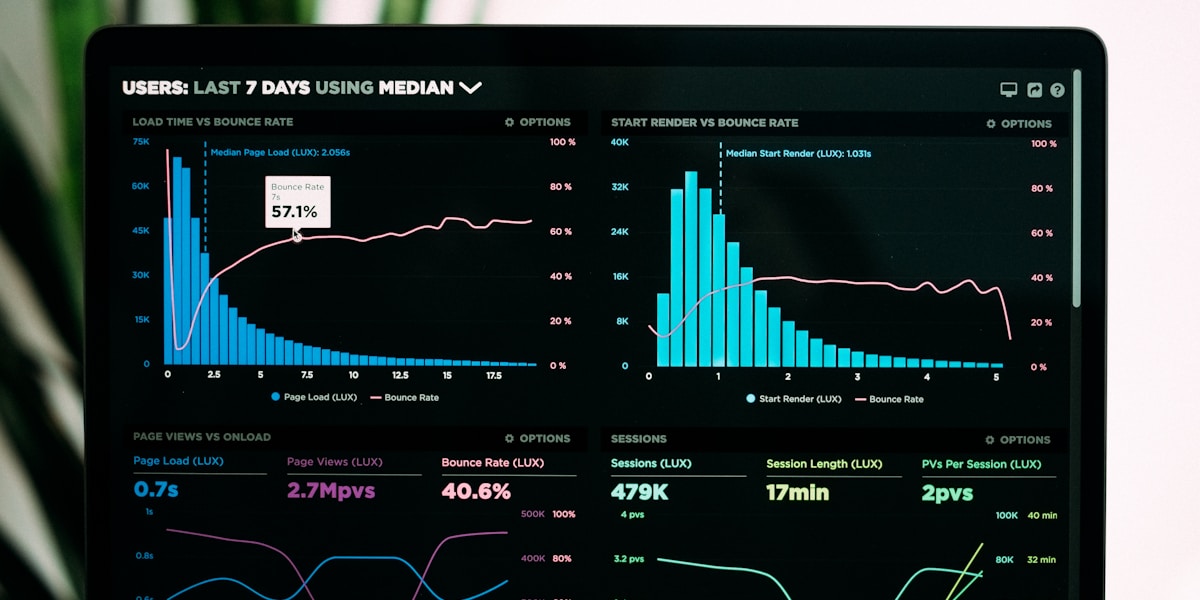
Evaluation prop firms use challenge-based assessments to identify skilled traders. Source: Unsplash
What Are Evaluation Prop Firms?
Evaluation prop firms (also called challenge-based prop firms) are proprietary trading companies that require traders to pass a trading challenge or evaluation before receiving funded capital. This model has become the industry standard because it allows firms to identify skilled traders while giving traders a path to funded accounts without needing their own capital.
The evaluation process typically involves two phases: a Challenge phase where you must hit a profit target (usually 8-10%) while managing risk, and a Verification phase where you must prove consistency with a smaller profit target (usually 5%). Some firms offer one-step evaluations that combine both phases into a single challenge.
Leading evaluation prop firms include FTMO (industry standard, two-phase evaluation), FundedNext (multiple evaluation models), MyFundedFX (no time limits), and The5ers (unique scaling model). Compare all options using our prop firm comparison tool or explore one-step prop firms for faster evaluation options.
Top Evaluation Prop Firms 2026
1. FTMO
FTMO is the industry standard for evaluation-based prop trading. Their two-phase evaluation system requires traders to pass a Challenge phase (10% profit target) followed by a Verification phase (5% profit target), proving both profitability and consistency.
FTMO's evaluation rules are clear and fair: 10% profit target in Phase 1, 5% in Phase 2, 5% daily drawdown, 10% maximum drawdown, and minimum 5 trading days. The firm offers account sizes from $10,000 to $200,000 with up to 90% profit split and challenge fee refunded with first payout.
FTMO's reputation, transparent rules, excellent support, and track record of paying traders make them the top choice for many traders. They support MT4, MT5, and cTrader platforms, making them accessible to traders using various trading software.
2. FundedNext
FundedNext offers multiple evaluation models including standard two-phase evaluations and Express one-step evaluations. Their unique feature is offering 15% profit share during the challenge phase, meaning you earn money even before getting funded.
FundedNext's evaluation rules are competitive: 10% profit target for Challenge, 5% for Verification (standard model), or 15% for Express one-step model. They offer account sizes from $5,000 to $200,000 with 80-90% profit splits and no consistency rules.
3. MyFundedFX
MyFundedFX offers flexible evaluation conditions with no time limits, making it ideal for traders who prefer to take their time. Their evaluation rules are straightforward: 10% profit target, 5% daily drawdown, 10% maximum drawdown.
MyFundedFX's no-time-limit policy means you can complete the evaluation at your own pace, reducing pressure and allowing you to trade when conditions are optimal. They offer account sizes from $5,000 to $200,000 with competitive profit splits.
4. The5ers
The5ers offers a unique evaluation model with a scaling program. Instead of fixed account sizes, The5ers starts traders with smaller accounts and scales them up based on performance, creating a growth-oriented approach to prop trading.
The5ers' evaluation process focuses on consistent profitability over time, with account scaling as traders prove their skills. This model is ideal for traders who want to grow their account size gradually rather than starting with a large account immediately.
5. Other Top Evaluation Firms
Several other reputable firms offer evaluation-based funding including SurgeTrader, E8 Markets, The Funded Trader, and others. Each firm has unique features, rules, and benefits, so it's important to compare options based on your trading style and preferences.
When choosing an evaluation prop firm, consider factors like profit splits, evaluation rules, account sizes, platform support, reset policies, and firm reputation. Use our comparison tool to evaluate all options side-by-side.
How Evaluation Prop Firms Work
Step 1: Choose Account Size and Pay Challenge Fee
Start by selecting your desired account size (typically $10,000 to $200,000+) and paying the one-time challenge fee. Challenge fees vary by account size, usually ranging from $50 to $500+. Larger accounts have higher fees but offer more capital to trade with.
Some firms offer discounts on challenge fees during promotions, and some refund the challenge fee with your first payout (like FTMO). Always check the firm's fee structure and any promotional offers before purchasing.
Step 2: Receive Demo Account and Start Trading
Once you pay the challenge fee, you receive access to a demo account with the same balance as your chosen account size. This demo account uses real market data and follows all the firm's trading rules, but you're trading with virtual capital.
You can trade any instruments the firm allows (forex, futures, stocks, etc.) using any strategy you prefer, as long as you comply with the firm's rules. Most firms allow Expert Advisors (EAs), news trading, and various trading styles.
Step 3: Pass Phase 1 (Challenge)
In Phase 1, you must hit the profit target (usually 8-10%) while staying within drawdown limits. You must also meet minimum trading day requirements (usually 3-5 days) and follow all trading rules. Once you reach the profit target and meet all requirements, you advance to Phase 2.
Common Phase 1 requirements include: 10% profit target, 5% daily drawdown limit, 10% maximum drawdown limit, minimum 5 trading days, and compliance with all trading rules. Some firms have consistency rules limiting daily profits, while others don't.
Step 4: Pass Phase 2 (Verification)
Phase 2 (Verification) requires hitting a smaller profit target (usually 5%) to prove consistency. The rules are typically the same as Phase 1, but the profit target is lower. This phase demonstrates that your Phase 1 success wasn't just luck.
Once you complete Phase 2, you receive your funded account. Some firms offer one-step evaluations that combine both phases into a single challenge with a higher profit target (usually 15-25%), allowing you to get funded faster.
Step 5: Receive Funded Account
After passing both phases (or completing a one-step evaluation), you receive your funded account. This is a live trading account with real capital, and you can start trading immediately. Your challenge fee may be refunded with your first payout, depending on the firm.
Funded accounts typically have the same rules as evaluations (drawdown limits, profit targets for scaling, etc.), but you now trade with real money and receive profit splits. Most firms offer scaling programs that increase your account size as you prove consistent profitability.
Typical Evaluation Rules Explained
| Rule | Typical Range | Explanation |
|---|---|---|
| Profit Target Phase 1 | 8-10% | Percentage of starting balance you must profit to pass Challenge phase |
| Profit Target Phase 2 | 5% | Smaller target to prove consistency in Verification phase |
| Daily Drawdown | 4-5% | Maximum loss allowed in a single trading day |
| Maximum Drawdown | 8-12% | Total maximum loss from starting balance or highest equity |
| Minimum Trading Days | 3-5 days | Minimum number of trading days required before passing |
| Consistency Rule | 30-40% or None | Some firms limit daily profits to 30-40% of total; others have no limit |
| Time Limit | 30-60 days or None | Some firms have time limits; others allow unlimited time |
Two-Phase vs One-Step Evaluations
Two-Phase Evaluations
How it works: Complete Phase 1 (Challenge) with 8-10% profit target, then Phase 2 (Verification) with 5% profit target. This two-step process proves both profitability and consistency.
Advantages: Lower individual phase targets make each phase more achievable. The two-phase structure helps identify consistently profitable traders. Industry standard used by most firms.
Best for: Traders who prefer gradual progress, want to prove consistency, or prefer the industry-standard approach used by firms like FTMO.
One-Step Evaluations
How it works: Complete a single phase with a higher profit target (usually 15-25%). Once you hit the target and meet all requirements, you receive your funded account immediately.
Advantages: Faster path to funding—no need to complete two separate phases. Single target to focus on. Can be completed more quickly if you have strong trading days.
Best for: Traders who want faster funding, prefer single-phase simplicity, or have high-volatility strategies that work better with one-step models. Explore one-step prop firms for more details.
Strategies for Passing Evaluations
1. Risk Management is Critical
The most common reason traders fail evaluations is hitting drawdown limits, not missing profit targets. Always prioritize risk management over profit targets. Use proper position sizing (risk 1-2% per trade), set stop losses, and never risk more than your daily drawdown limit allows. Protecting capital is more important than making profits quickly.
2. Understand All Rules
Read and understand every rule before starting. Know your profit targets, drawdown limits, minimum trading days, consistency rules (if any), and any trading restrictions. Violating rules, even accidentally, can result in immediate failure. Many traders fail not because of poor trading, but because they didn't understand the rules.
3. Trade Consistently, Not Aggressively
While it's tempting to try to hit profit targets quickly, aggressive trading often leads to drawdown violations. Focus on consistent, sustainable trading that gradually builds profits while managing risk. Slow and steady progress is better than quick gains followed by losses that violate drawdown limits.
4. Use Your Strategy, Not Someone Else's
Don't change your trading strategy just for the evaluation. Use the strategy you know and trust. If you're a swing trader, swing trade. If you're a scalper, scalp. If you use EAs, use EAs. The evaluation is about proving your trading skills, not adapting to someone else's approach.
5. Track Your Progress
Monitor your progress daily. Track your current profit percentage, remaining drawdown buffer, trading days completed, and progress toward profit targets. This helps you make informed decisions about when to trade, when to be cautious, and when you're on track to pass.
6. Don't Overtrade
Many traders fail by overtrading—taking too many trades, trading during poor market conditions, or forcing trades when there are no good setups. Quality over quantity. It's better to take fewer, high-probability trades than many low-quality trades that increase risk without meaningful profit potential.
Common Evaluation Mistakes to Avoid
❌ Ignoring Drawdown Limits
The biggest mistake is not respecting drawdown limits. Many traders focus only on profit targets and ignore the drawdown limits until it's too late. Always monitor your drawdown and stop trading if you're approaching limits.
❌ Not Reading Rules
Failing to read and understand all rules leads to violations. Rules vary by firm—some allow news trading, some don't; some have consistency rules, some don't. Always read the complete rule set before starting.
❌ Trading Too Aggressively
Trying to hit profit targets too quickly often leads to large losses that violate drawdown limits. Aggressive trading increases risk and reduces the probability of passing. Patience and consistency are key.
❌ Changing Strategy Mid-Evaluation
Switching strategies during an evaluation because you're not making progress fast enough usually makes things worse. Stick with your proven strategy and trust the process. Strategy changes should happen between evaluations, not during them.
❌ Not Tracking Progress
Without tracking your progress, you can't make informed decisions. You might think you're doing well when you're actually close to drawdown limits, or you might be more cautious than necessary when you have plenty of buffer.
❌ Overtrading
Taking too many trades increases transaction costs, risk exposure, and the chance of making mistakes. Quality trades are more important than quantity. Focus on high-probability setups rather than trading constantly.
What Happens If You Fail an Evaluation?
If you fail an evaluation (hit drawdown limits, violate rules, or don't meet profit targets within the time limit), you typically have these options:
- Purchase a Reset: Most firms allow you to purchase a reset to try again. Reset fees are usually 50-100% of the original challenge fee, depending on the firm and account size.
- Free Resets: Some firms offer free resets under certain conditions (e.g., if you were close to passing, during promotions, or for repeat customers).
- Discounted Resets: Many firms offer discounted reset fees, especially if you purchase multiple resets or during promotional periods.
- Start Fresh: You can always purchase a new evaluation with a different account size or try a different firm.
Failing an evaluation is common—many successful prop traders needed multiple attempts before passing. Use failures as learning experiences. Analyze what went wrong, adjust your approach, and try again. The key is learning from mistakes rather than repeating them.
Evaluation vs Instant Funding
| Feature | Evaluation | Instant Funding |
|---|---|---|
| Path to Funding | Must pass challenge first | Immediate funding |
| Challenge Fee | Required ($50-$500+) | No challenge fee |
| Time to Funded | Days to months | Immediate |
| Profit Targets | Must hit targets to pass | No targets required |
| Risk | Risk of failing challenge | Risk of losing funded account |
| Best For | Proving skills, lower risk | Immediate trading, experienced traders |
Evaluation prop firms require you to prove your skills before getting funded, while instant funding prop firms provide immediate access to funded accounts. Each approach has advantages: evaluations help identify skilled traders and reduce risk, while instant funding provides immediate trading opportunities for experienced traders.
How to Choose the Right Evaluation Prop Firm
1. Compare Evaluation Rules
Compare profit targets, drawdown limits, minimum trading days, consistency rules, and time limits across firms. Choose rules that match your trading style. For example, if you trade high-volatility strategies, avoid firms with strict consistency rules. If you prefer gradual progress, choose firms without time limits.
2. Evaluate Profit Splits and Fees
Compare profit splits (typically 70-90%), challenge fees, reset fees, and any other costs. Higher profit splits mean more money stays with you, but don't sacrifice good rules just for better splits. Also consider if challenge fees are refunded—this can significantly impact total costs.
3. Check Platform Support
Ensure the firm supports your preferred trading platform (MT4, MT5, cTrader, NinjaTrader, etc.). Platform compatibility is crucial—you need to trade on a platform you're comfortable with. Most firms support multiple platforms, but verify before purchasing.
4. Research Firm Reputation
Check reviews, forums, and community feedback about the firm. Look for firms with a track record of paying traders, transparent rules, and good support. Avoid firms with numerous complaints about payment issues or rule changes.
5. Consider Account Sizes and Scaling
Evaluate available account sizes and scaling programs. Some firms start with smaller accounts and scale up, while others offer larger starting accounts. Consider your capital needs and growth goals when choosing account sizes.
Frequently Asked Questions
How long do evaluations take?
Evaluation duration varies based on your trading performance and the firm's rules. Most evaluations have minimum trading day requirements (3-5 days) but no maximum time limits. Fast traders can complete evaluations in a week or two, while others may take months. Some firms offer one-step evaluations that can be completed faster than traditional two-phase evaluations.
What happens if I fail an evaluation?
If you fail an evaluation (hit drawdown limits or violate rules), you typically need to purchase a reset to try again. Reset fees vary by firm and account size, usually 50-100% of the original challenge fee. Some firms offer free or discounted resets under certain conditions. Many traders need multiple attempts before passing, so persistence is important.
Can I use Expert Advisors in evaluations?
Most evaluation prop firms allow Expert Advisors (EAs) and automated trading strategies. However, you must pass the evaluation using your EA—the firm will evaluate your strategy's performance. Some firms have restrictions on EA trading (minimum hold times, etc.), so always check the firm's rules before using automated strategies.
Are evaluation prop firms legitimate?
Yes, reputable evaluation prop firms like FTMO, FundedNext, and TopStep are legitimate businesses with track records of paying traders. However, the industry has some less reputable firms. Always research firms thoroughly, check reviews, verify payment histories, and choose established firms with transparent rules and good reputations.
What's the difference between two-phase and one-step evaluations?
Two-phase evaluations require passing a Challenge phase (8-10% profit) followed by a Verification phase (5% profit) to prove consistency. One-step evaluations combine both phases into a single challenge with a higher profit target (15-25%). One-step evaluations are faster but require hitting a larger target in one phase.
Do I get my challenge fee back?
Some firms, like FTMO, refund your challenge fee with your first payout after getting funded. Other firms don't refund challenge fees. Always check the firm's fee structure—challenge fee refunds can significantly impact your total costs and make some firms more attractive than others.
Related Resources
One-Step Prop Firms
Single-phase evaluation challenges
Instant Funding Prop Firms
Immediate funded accounts without evaluations
Best Prop Firms
Top-rated proprietary trading firms
Free Trial Prop Firms
Risk-free evaluation testing
All Prop Firms
Complete directory of prop firms
Compare Prop Firms
Compare all prop firms side-by-side